
Plastic & Regenerative Surgery
Regenerative medicine in Brescia: helping tissues repair themselves.
Regenerative medicine is not a single therapy. It is a set of strategies that use resources from your own body, such as blood platelets and adipose (fat) tissue, to create the conditions in which a tissue can recover, at least in part, its structure and function.
At Palazzo Manzoni, regenerative medicine has its roots in the plastic surgery department and works with a multidisciplinary team: orthopaedics, maxillofacial surgery, vascular surgery and adipose tissue surgery. One principle guides the whole journey: diagnosis first, then treatment, and only when there is a genuine indication.

Autologous
Platelets and adipose tissue come from the patient’s own body
Four specialists
Orthopaedics, maxillofacial, vascular, adipose tissue
Diagnosis first
No treatment without a clear cause
Clear goals
Realistic results, explained at your consultation
What It Is
Regenerating does not mean rebuilding from scratch.
Many traditional therapies correct a symptom or replace a damaged structure. Regenerative medicine has a different goal: to support the natural processes of tissue repair, renewal and reorganisation, harnessing cells, blood components, biomaterials and biological signals.
The best-known tool is PRP, platelet-rich plasma: it is obtained from an ordinary blood sample, which is centrifuged to concentrate the platelets. Platelets are not only involved in clotting: they contain growth factors and mediators that take part in tissue repair, inflammation and the formation of new small blood vessels.
The second key player is adipose tissue. Fat is not merely a material for restoring volume: it contains matrix, blood vessels and stromal cells that produce molecules capable of influencing the surrounding biological environment. This is the origin of techniques such as microfat and nanofat, and of applications in orthopaedics and maxillofacial surgery.
A question to bring to your consultation: not so much “can I have PRP?”, but rather “what is the most appropriate treatment for my problem, at the stage it has reached?”.
Did you know?
Platelets, the key players in PRP, also have an Italian story: already described in 1865 by the German Max Schultze, in 1882 they were observed under the microscope by the pathologist Giulio Bizzozero in the circulating blood of living animals, and he described their role in adhesion, aggregation and fibrin formation. He worked in Turin.
Sources: Ribatti D, Crivellato E, Leukemia Research 2007; de Gaetano G, Cerletti C, Platelets 2002; Brewer DB, British Journal of Haematology 2006
Areas of the Division
Where regenerative medicine may have a role
The same biological resources are used in very different ways depending on the tissue: the skin of a face, the cartilage of a knee, a jaw joint, a leg ulcer. That is why each area has its own lead specialist.
In some fields the scientific evidence is already substantial; in others it is promising but still limited. On each page you will find what research says today, with sources.
→PRP, platelet-rich plasma
how it is prepared, what it is used for and what we can realistically expect. Discover PRP
→Aesthetic regenerative medicine
Facial PRP, skin quality and combined treatments with laser and microneedling. Face and skin
→Fat grafting (lipofilling), microfat and nanofat
autologous adipose tissue for volume, skin quality and scars. Adipose tissue
→Scars
stiff, contracting or hypertrophic scars: when fat grafting and PRP can help. Scars
→Orthopaedics
knee, tendons and shoulder: PRP and biological therapies with Dr. Claudio Gilardoni. Regenerative medicine in orthopaedics
→Temporomandibular joint
pain, clicking and limited mouth opening: the care pathway with Dr. Luana Salvagni. The TMJ
→Ulcers and hard-to-heal wounds
when a wound does not heal: circulation first, then biology, with Prof. Edoardo Cervi. Ulcers and wounds
Every journey begins with a consultation: that is where we work out whether a regenerative treatment makes sense for you.
The Team
Four specialists,
one single journey
Regenerative medicine at Palazzo Manzoni is teamwork: one specialist harvests the adipose tissue, another uses it in a joint, another assesses the circulation before treating a wound. At your first consultation you see the specialist for the area that concerns you.

Dr. Claudio Gilardoni
Specialist in Orthopaedics and Traumatology · lead orthopaedic specialist for regenerative medicine: knee, shoulder, tendons.

Dr. Stefano Di Nonno
Specialist in General Surgery, with a master’s degree in Aesthetic Surgery · harvesting and preparation of adipose tissue.

Dr. Luana Salvagni
Specialist in Maxillofacial Surgery · temporomandibular joint (TMJ).

Prof. Edoardo Cervi
Vascular surgeon, head of the department of vascular surgery and phlebology · ulcers and hard-to-heal wounds.
Our Approach
Innovation, with realistic goals
PRP, adipose tissue and biological therapies are an interesting prospect in contemporary medicine. For precisely this reason, they must be used on the basis of appropriate indications, scientific evidence and correct patient selection.
The aim is not to promise impossible results, but to integrate the possibilities offered by biology with diagnosis, rehabilitation and, when needed, traditional surgery.

Did you know?
In 1991 the biologist Arnold Caplan titled an article “Mesenchymal stem cells”. Twenty-six years later he proposed calling them Medicinal Signaling Cells: in his view, it is not these cells that become the new tissue, but the signals they release that help the patient’s own cells to build it.
Sources: Caplan AI, Journal of Orthopaedic Research 1991; Caplan AI, Stem Cells Translational Medicine 2017
01
Diagnosis first
An injection is no substitute for a diagnosis. A consultation and, when needed, tests come before any treatment proposal.
02
Evidence, not trends
We distinguish what is supported by solid studies from what is still experimental, and we tell you so clearly.
03
Your own tissue
Platelets and fat are autologous: they come from you and return to you, prepared in the same session.
04
An integrated pathway
Exercise, physiotherapy, compression, surgery: biological therapy only makes sense within a complete plan.
05
Even saying no
Sometimes the proportionate answer is a different therapy, or waiting. Telling you so is part of our job.
Your Journey
How it works, step by step
Step 01
Book your consultation
Phone, email, WhatsApp or online form. We direct you to the specialist for the area that concerns you.
Step 02
The diagnosis
Consultation, medical history and tests when needed: ultrasound, X-rays, MRI or colour Doppler ultrasound, depending on the problem.
Step 03
The shared plan
Indication, alternatives, number of sessions and realistic results, explained calmly. You can decide in your own time.
Step 04
The treatment
In the outpatient clinic or in the operating theatre at Palazzo Manzoni. PRP is prepared from your blood, and adipose tissue is harvested and processed in the same session.
Step 05
Check-ups and follow-up
Improvement, when it occurs, is gradual. Check-ups are used to measure it and to complement the treatment with exercise, physiotherapy or other care.
Frequently Asked Questions
Frequently asked questions
about regenerative medicine
What is regenerative medicine?
It is a set of strategies that aim to support the natural processes of tissue repair, using cells, blood components, biomaterials and biological signals. The most widely used today are PRP, obtained from the patient’s blood, and autologous adipose tissue. The aim is not only to correct a symptom, but to create the conditions for the tissue to recover, at least in part, its structure and function.
Does regenerative medicine make tissues grow back?
That is not the right way to see it. In some cases, studies show less pain, better function or better-quality skin and scars, but they do not show, for example, that PRP or adipose tissue can make cartilage worn away by osteoarthritis grow back. “Regenerative” does not mean rebuilding a damaged tissue from scratch.
What is the difference between PRP and adipose tissue?
PRP is obtained from blood and mainly concentrates platelets and the molecules they release. Adipose tissue has a more complex biological structure, with matrix, small blood vessels and stromal cells. One is not necessarily “more powerful” than the other: the choice depends on the problem, its severity and the evidence available for that specific indication.
Stem cells: what are we really talking about?
Adipose tissue contains stromal cells with mesenchymal characteristics. Today they are thought to act mainly through a paracrine mechanism, that is, by communicating with nearby cells through growth factors and other molecules, rather than by turning into new tissue. Indeed, the International Society for Cell & Gene Therapy (ISCT) recommends speaking of “mesenchymal stromal cells” and using the word “stem” only when stemness has been demonstrated with rigorous evidence.
Which problems may it be indicated for?
At Palazzo Manzoni we consider it for skin quality and some scars, for early or intermediate knee osteoarthritis and some tendinopathies, for temporomandibular joint disorders and, as part of a vascular care pathway, for some ulcers and hard-to-heal wounds. In every area, the indication is decided after the diagnosis.
Is the treatment painful?
PRP requires a blood sample and an injection, sometimes under ultrasound guidance: the discomfort is generally mild and short-lived. Harvesting adipose tissue involves a small liposuction, performed under local anaesthetic, possibly with sedation tailored to the individual case. At your consultation we explain in detail what to expect in your case.
How many sessions are needed?
There is no single protocol that suits everyone. The number of treatments depends on the problem, the type of preparation and your individual characteristics. Response times also vary: when it occurs, improvement is often gradual over the following weeks.
Who will I see at my first consultation?
The specialist for the area that concerns you: Dr. Claudio Gilardoni for the knee, shoulder and tendons, Dr. Luana Salvagni for the temporomandibular joint, Prof. Edoardo Cervi for ulcers and wounds, and the surgeons of the plastic surgery department for skin, scars and fat grafting (lipofilling). Dr. Stefano Di Nonno is responsible for harvesting and preparing adipose tissue.
Take the Next Step
Your next step starts
with a conversation
At Palazzo Manzoni in Brescia, every consultation is personal, unhurried, and designed to give you clarity about your next step.
Address
Via dei Mille 14, 25122 Brescia, Italia
Phone
Hours
Mon-Fri 8:30-18:30 · Sat 9:00-13:00
01
Get in touch
Call, email, WhatsApp, or book online.
02
Meet your specialist
A personal consultation to understand your situation.
03
Your plan, your pace
Together you decide the best path forward.
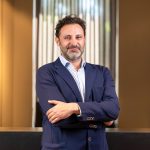

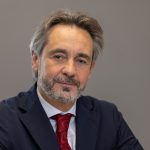
Content reviewed by Dr. Stefano Di Nonno, Dr. Luana Salvagni, Dr. Claudio Gilardoni and Prof. Edoardo Cervi, the regenerative medicine team at Palazzo Manzoni.