
Regenerative Medicine
Aesthetic regenerative medicine: facial PRP and skin quality.
In recent years, the idea of rejuvenation has been changing. Alongside botulinum toxin, fillers, lasers and surgery, strategies are being developed that aim not only to correct a cosmetic imperfection, but to improve the biological quality of the skin and subcutaneous tissue.
PRP, adipose tissue and nanofat are some of the methods currently being studied in this field. At Palazzo Manzoni, in Brescia, we offer them within a personalised plan, with realistic goals and without transforming a face: the idea is to preserve and improve, not to change.

Quality, not volume
Skin texture, elasticity and thickness
Autologous
Plasma and adipose tissue come from you
Tailored
On its own or together with laser and microneedling
Gradual results
Realistic goals, discussed at your consultation
From Filling to Regeneration
Regenerating the skin does not mean filling it.
For many years, aesthetic medicine focused on correcting the signs of ageing: reducing a wrinkle, restoring volume, correcting sagging or a pigmentation mark. Regenerative medicine introduces a different idea: stimulating or supporting the natural processes of tissue repair and renewal.
PRP is obtained from your blood: after centrifugation, a plasma fraction richer in platelets is isolated, and platelets contain growth factors and molecules involved in communication between cells. On the face it is used mainly to improve skin quality, on its own or, in some strategies, together with other methods.
Fractional lasers and microneedling produce a controlled stimulation of the skin that activates repair processes. PRP can be included in these treatment pathways to support the tissue’s biological response. But combining several techniques is not automatically better: the choice depends on your skin and your goal.
Did you know?
Not all combinations are equal. In a network meta-analysis of 24 randomised trials on acne scars, combinations worked better than microneedling alone, but the best-performing combination was microneedling plus chemical peel, not microneedling plus PRP.
The Goals
What we aim to improve, realistically
A regenerative treatment works on the quality of the tissue, not on the shape of the face. That is why goals are set at the consultation, by looking at the skin closely and listening to what really bothers you.
Some results are better documented than others: we tell you clearly before we begin.

01
Skin texture and grain
Skin that looks and feels more even: a 2019 review identifies this as the effect with the most convincing evidence, although a 2025 review finds it less consistent.
02
Thickness and elasticity
Thin skin or skin that has lost tone: in many studies, the most frequent improvements concern precisely thickness and elasticity.
03
Fine lines and uneven pigmentation
Less consistent effects in studies: they may require a strategy combined with other methods.
04
Scars
Particularly atrophic acne scars, where combining PRP with fractional laser has given favourable results in several meta-analyses, though not in all of them. Scars
05
Tissues marked by previous procedures
Areas treated in the past or tissues damaged by ageing, where adipose tissue may have a role. Adipose tissue
The Methods
The tools of aesthetic regenerative medicine
In principle, the methods are not alternatives to one another: they can be integrated into a personalised plan, chosen on the basis of your skin’s characteristics and your goal.
→Facial PRP
superficial injections of platelet-rich plasma to improve skin texture, thickness and elasticity. A session includes the blood sample, preparation and treatment.
→PRP and fractional laser
the laser creates micro-zones of controlled stimulation, and PRP is applied to support the tissue’s response. It is one of the most studied combinations for acne scars, with favourable results in several meta-analyses but not in all of them.
→PRP and microneedling
regular micro-perforations of the skin combined with plasma: useful in some cases, but not always the most effective combination.
→Nanofat
emulsified and filtered adipose tissue, so fluid that it passes through very fine needles: designed for skin quality rather than volume. Microfat and nanofat
→Microfat and fat grafting (lipofilling)
when, in addition to quality, lost volume needs to be restored, with small grafts of autologous fat. Fat grafting (lipofilling)
Related procedures in Brescia: facial surgery, blepharoplasty and facelift.
Food for Thought
Does regenerating mean rejuvenating? Not necessarily.
A filler can correct volume. Botulinum toxin can reduce the activity of certain facial expression muscles. A facelift can surgically reposition tissues. A regenerative strategy, by contrast, seeks to act mainly on the biological quality of the tissue.
That is why the different methods should not be seen as competing: they can coexist within the same plan. Sometimes the most useful step is a small one; sometimes surgery is needed; sometimes the right answer is to wait.
The most interesting prospect is an aesthetic medicine that is ever less focused on transformation and ever more on preservation: acting progressively and proportionately on the processes of ageing, without making a face look unlike itself.
Did you know?
The data on facial PRP are more nuanced than is often thought. In a 2025 review of 20 studies, significant improvements appeared in 80% of the studies on skin thickness and 75% of those on elasticity, but in only 40% of those on wrinkles and in none of those on hydration.

Adipose Tissue
Dr. Stefano Di Nonno
Specialist in General Surgery, with a master’s degree in Aesthetic Surgery. In the regenerative medicine division at Palazzo Manzoni, he is responsible for harvesting and preparing adipose tissue.
Specialisation
General Surgery, with a master’s degree in Aesthetic Surgery
Role in the division
harvesting adipose tissue and preparing microfat and nanofat
Team
works with the doctors of the plastic surgery department and with the regenerative medicine specialists
Your Journey
How it works, in Brescia
Step 01
Book your consultation
Phone, email, WhatsApp or online form.
Step 02
The skin assessment
We look at texture, thickness, elasticity, pigmentation marks and scars, with photographic documentation, and we listen to what really bothers you.
Step 03
The plan
Method, number of sessions, timing and expected results, in writing. If a regenerative treatment is not the right answer, we tell you.
Step 04
The treatment
PRP is prepared from your blood in the same session; for microfat and nanofat, adipose tissue is harvested and prepared in the operating theatre.
Step 05
Check-ups
Results are gradual: at check-ups we assess the skin’s response and decide whether to continue or change strategy.
Frequently Asked Questions
Frequently asked questions
about facial PRP and aesthetic regenerative medicine
What is facial PRP?
It is a treatment that uses platelet-rich plasma obtained from your blood: after a blood sample and centrifugation, the plasma is injected superficially into the skin of the face. Platelets contain growth factors that take part in repair processes: the aim is to improve skin quality, not to fill.
What results can be expected from facial PRP?
Studies mainly describe improvements in skin texture, thickness and elasticity, generally modest and gradual. On wrinkles the results are less consistent, and on hydration they have not been demonstrated. That is why at the consultation we set realistic goals and, if needed, suggest different or combined methods.
How many PRP sessions are needed on the face?
There is no single protocol: studies use very different schedules. The number of sessions and the interval between them are decided according to your skin and your goal, and are set out in the written plan you receive after the consultation.
Does facial PRP hurt? Does it leave marks?
The discomfort is generally mild. After treatment there may be slight redness, minor swelling or a few small dots at the injection points, which usually resolve within a few days. At the consultation we give you precise advice on how to plan around it.
What is the difference between PRP, fillers and biostimulation?
A filler corrects volume or a wrinkle; biostimulation with injectable products stimulates the skin with external substances; PRP uses components of your own blood to support repair processes. In principle, they are not alternatives: they can be part of the same plan, each for the purpose it serves best.
Which is better, PRP or nanofat?
They are two different tools. PRP is obtained from blood through a blood sample; nanofat is obtained from adipose tissue through a small fat harvest, then emulsified and filtered, and is designed mainly for thin skin, fine lines and scars. The choice depends on what you want to improve and on the characteristics of your tissues.
Can PRP be combined with laser or microneedling?
Yes. Fractional lasers and microneedling stimulate the skin in a controlled way, and PRP can be applied to support the tissue’s response. For acne scars, the combination with fractional laser has given favourable results in several meta-analyses, although a 2026 analysis found no clear advantage; moreover, combining more techniques is not always the most effective option.
How much does facial PRP cost in Brescia?
The cost depends on the method chosen, the area to be treated and the number of sessions. After the consultation you will receive a detailed written quote.
Take the Next Step
Your next step starts
with a conversation
At Palazzo Manzoni in Brescia, every consultation is personal, unhurried, and designed to give you clarity about your next step.
Address
Via dei Mille 14, 25122 Brescia, Italia
Phone
Hours
Mon-Fri 8:30-18:30 · Sat 9:00-13:00
01
Get in touch
Call, email, WhatsApp, or book online.
02
Meet your specialist
A personal consultation to understand your situation.
03
Your plan, your pace
Together you decide the best path forward.
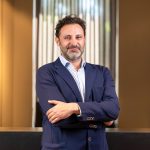
Content reviewed by Dr. Stefano Di Nonno, specialist in General Surgery with a master’s degree in Aesthetic Surgery.