Lipedema: symptoms, stages and treatment
23.11.2026
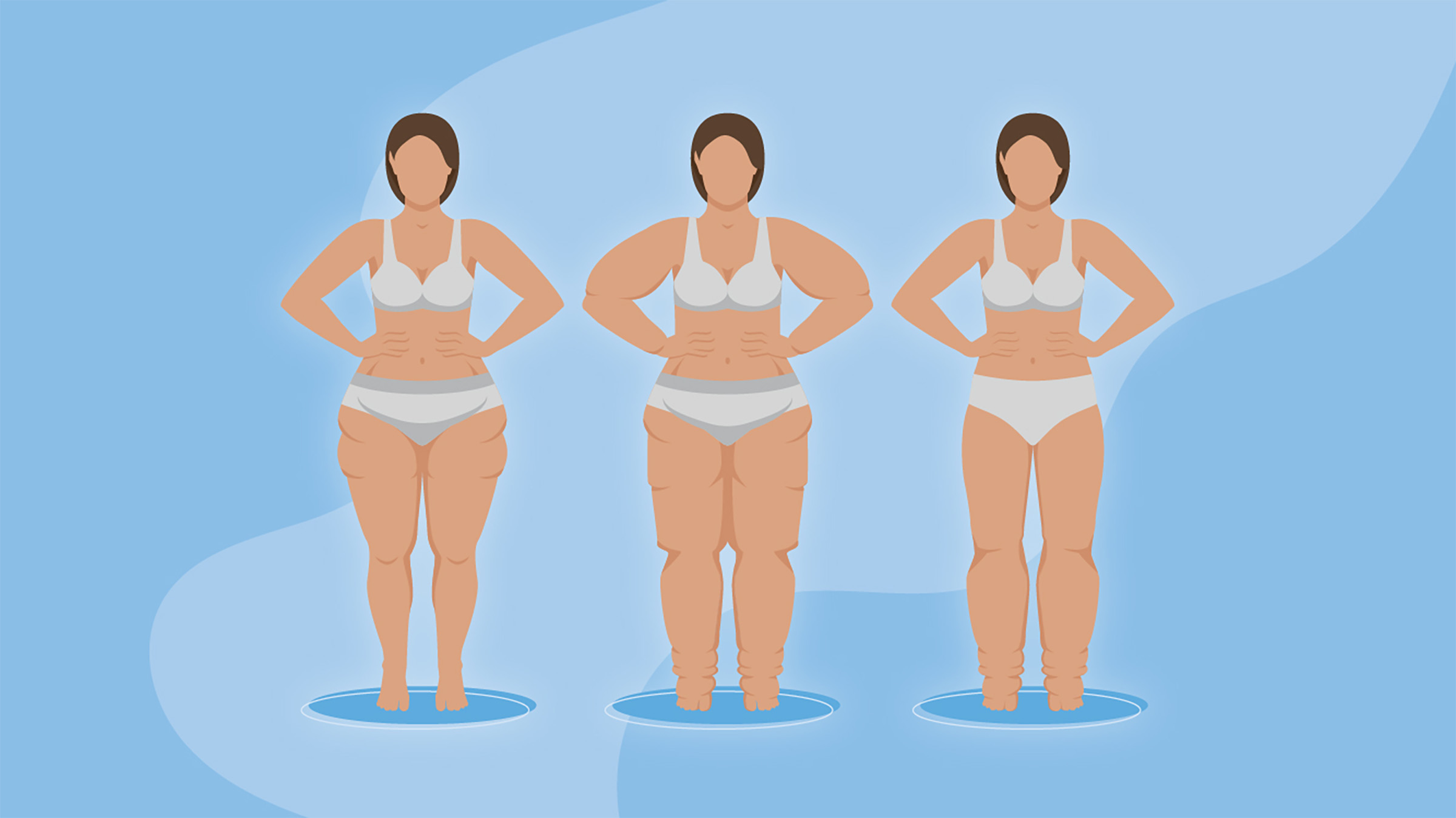
Lipedema is an abnormal, symmetrical build-up of fat under the skin that mainly affects the legs and hips, sometimes the arms, while sparing the feet. It occurs almost exclusively in women, is painful to the touch, bruises easily and does not respond to dieting alone. Recognising its symptoms and stage is the first step towards the right treatment, which today is mainly conservative.
Perhaps you have been told that you just need to lose weight. You followed the diet, the rest of your body changed, your legs did not: heavy in the evening, sore when pressed, covered in bruises from the slightest knock. Here we look at how lipedema is recognised, how it is classified into stages and how it is treated. If you want to understand how it differs from lymphedema, read our article Lipedema and lymphedema: two different conditions, often confused.
At a glance
- Lipedema affects almost only women and has a genetic and hormonal basis.
- It is recognised by specific signs: symmetry, a spared foot, pain on pressure and easy bruising.
- Diagnosis is clinical, with a Doppler ultrasound to rule out associated venous insufficiency.
- Treatment is a long-term conservative pathway, done as an outpatient with no time off.
What is lipedema?
Lipedema is a chronic, progressive condition of the subcutaneous fat tissue. It is not obesity and it is not lymphedema, although it is often mistaken for one or the other. Fat builds up disproportionately in specific areas, usually the thighs, hips and legs, sometimes the arms, while the rest of the body may stay slim.
The condition has a strong genetic component and is linked to the hormonal milestones in a woman’s life: puberty, pregnancy and menopause. Cases in men are very rare.
Did you know? The word lipedema comes from Greek: lipos means fat and oidema means swelling. Yet the swelling in lipedema is mainly due to fat tissue, not to lymph as in lymphedema.
Lipedema symptoms and the signs to look for
Lipedema is recognisable once you know what to look for. These are the signs that guide the specialist:
- Symmetry: both legs are affected, in a similar way.
- Disproportion: the hips and thighs are much larger than the upper body and the ankles.
- The spared foot: the foot stays in normal proportion, and above the ankle a sort of “step” or cuff of fat forms, known as the Cuff Sign.
- Pain on pressure: the legs hurt when pressed, more than you would expect.
- Easy bruising: bruises appear even after minor knocks.
- Heaviness: the legs feel heavy, especially towards the evening.
- No response to dieting in the affected areas, even when the rest of the body slims down.
None of these signs is enough on its own: it is the overall picture that counts. Lymphedema, for example, is more often asymmetrical, involves the foot and shows Stemmer’s sign, a fold of skin at the base of the second toe that cannot easily be lifted. Heavy, swollen legs caused by vein problems also have different features.
The stages of lipedema: how it progresses
Lipedema is chronic, but it is also progressive. Many women describe a slow worsening that began at puberty, increased after pregnancy and changed again with menopause. Its progression is described in stages, based on how the skin and the tissue beneath it look and feel:
- Stage I: the skin is still smooth, but the tissue beneath it has increased and small nodules can be felt.
- Stage II: the skin surface becomes uneven, with dimples, and the nodules are larger.
- Stage III: the tissue forms bulges and overhanging folds, especially on the inner thighs and around the knees.
- Advanced phases: lipedema can be combined with lymphedema. This is called lipo-lymphedema, which some describe as stage IV.
The stage is identified at the consultation and shapes the plan, starting with the class of compression stocking. Managed from the early stages, lipedema tends to progress more gently: this is no cause for alarm, but it is a good reason not to put off the consultation.
Did you know? Lipedema was first described only in 1940, by Allen and Hines at the Mayo Clinic. The disproportionate build-up of fat in the female body had appeared in old textbooks long before, without being recognised as a condition in its own right.
How lipedema is diagnosed
Diagnosis is clinical: it is based on signs, not on the scales. At the first consultation the specialist goes through your history (when the disproportion appeared, how it changed at hormonal milestones, what responded to dieting) and examines the recognised signs.
The assessment is completed with a venous Doppler ultrasound, which identifies or rules out associated venous insufficiency: it is common in patients with lipedema and can change the treatment plan. You leave the consultation with a diagnosis, the stage and a written plan.
Lipedema treatment: the conservative pathway
Treatment is a set of components applied together and kept up over time: taken one at a time, they achieve much less.
Compression. A class II compression stocking worn during the day, class III or made to measure in the advanced stages. It supports venous and lymphatic return and eases evening heaviness.
Manual lymphatic drainage. Regular sessions, usually weekly in the initial phase, that help reduce heaviness and pain.
Low-impact exercise. Walking, swimming, cycling, aqua cycling. In water, buoyancy reduces the load on the joints and water pressure supports lymphatic return.
Weight management, with realistic expectations. Diet and exercise work as usual on the unaffected areas; the areas with lipedema respond less.
Where indicated, complementary treatments are added. Carboxytherapy is the delivery of medical CO2 under the skin, usually in cycles of eight to ten sessions lasting 20 to 30 minutes, to improve microcirculation and tissue elasticity. Mesotherapy uses targeted injections into the subcutaneous layer. They are supporting tools, not substitutes.
At Palazzo Manzoni the pathway is led by Dr. Andrezza Silvia Guedes. Sessions are outpatient and need no time off. The first review is usually at three months; after that, check-ups take place every three to six months at first and become less frequent as the condition stabilises. You will find the details on the conservative lipedema treatment page.
Liposuction and realistic expectations
There are liposuction protocols specific to lipedema, with a growing evidence base for selected stages. At Palazzo Manzoni the lipedema pathway is conservative: surgical options, where indicated, are discussed with you at the consultation and referred appropriately. In every case the conservative core remains the foundation.
It is right to be clear about the limits too: lipedema is currently considered chronic and the pathway does not promise a cure. It controls symptoms (pain, heaviness, bruising), slows progression and improves everyday life, with benefits that build up over time. The cost depends on the components of your plan, and you receive a clear quote after the first consultation.
Frequently asked questions
How can I tell if I have lipedema?
Typical signs are a symmetrical increase in the size of the legs and hips, a foot that stays normal, pain on pressure, easy bruising and no response to dieting in those areas. Only a specialist consultation can confirm it, telling it apart from excess weight, lymphedema and venous insufficiency.
Can lipedema be cured?
Lipedema is currently considered a chronic condition. The conservative pathway does not promise a cure, but it controls symptoms, slows progression and improves quality of life, with benefits that build up over time.
Does lipedema go away with dieting?
Not with dieting alone. Lipedema fat responds poorly to calorie restriction, which works normally on the rest of the body. Diet and exercise are still useful, as part of a wider plan and with realistic expectations.
Do I need a referral for a lipedema consultation?
No. At Palazzo Manzoni, Via dei Mille 14 in Brescia, you can book a lipedema consultation directly by phone on +39 030 294 2437, by email or online.
If you recognise yourself in this description, the first step is to put a name to what you are feeling. At the Lipedema and Body Phlebology service of Istituto Chirurgico Palazzo Manzoni in Brescia, the consultation combines the clinical examination and the Doppler ultrasound in a single appointment. You can book a vascular and phlebology consultation online or by phone on +39 030 294 2437.