Blepharoplasty Before and After: recovery and results
19.10.2026
After blepharoplasty your eyes look more rested, but the before and after reveals itself gradually: swelling and bruising dominate the first few days, while the final result shows once the tissues have settled and the scar has matured, a process that takes up to a year. In most cases you will want to stay out of the public eye for just a few days.
If you are looking at before and after photos and wondering how your own recovery will go, it is natural to want to know in advance: you have work and commitments to plan around. Here we look at what really changes, how to read the images you find online and what to expect at each stage. For an introduction to the procedure itself, read Blepharoplasty: when the eyes communicate tiredness.
At a glance
- Price: upper or lower eyelids starting from €3,600, upper and lower together starting from €6,000, all inclusive.
- Day Surgery: home the same day or, at most, after one night of observation.
- Social downtime: a few days in most cases, varying from person to person.
- Scars: hidden in the natural crease of the upper eyelid; full maturation takes up to a year.
Blepharoplasty before and after: what really changes
Blepharoplasty corrects two specific signs: excess skin on the upper eyelids and bags on the lower ones. These are the details that make a face look tired even when it isn’t, and no cream truly corrects them.
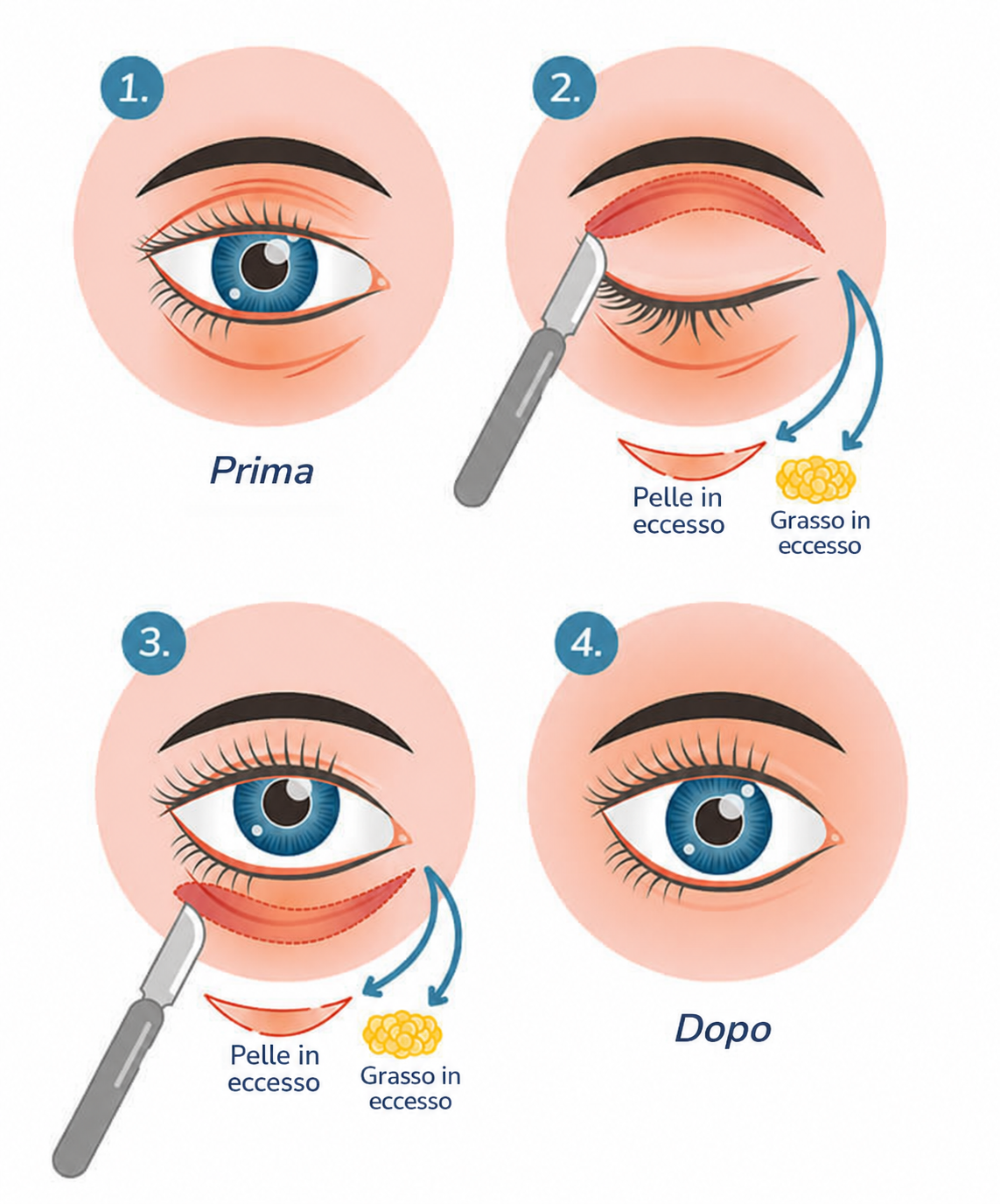
There are three variants. Upper blepharoplasty removes a carefully measured amount of excess skin, and small amounts of muscle and fat if needed, through an incision hidden in the natural crease. Lower blepharoplasty treats bags and laxity of the lower eyelid, either transconjunctivally, from the inside of the eyelid, or through the skin, sometimes redistributing fat into the tear trough. Combined blepharoplasty treats both in a single operation.
The aim of the “after” is not different eyes. It is the same eyes, looking more rested. A well performed blepharoplasty removes what weighs the eyelids down while respecting their natural shape and your expression: people who meet you should think you have slept well, not that you have had surgery.
Did you know? The name comes from Greek: blepharon means eyelid and plassein means to shape. The term was introduced in 1818 by the surgeon Karl Ferdinand von Graefe, who used it for eyelid reconstruction, long before the procedure also became aesthetic.
How to read before and after photos
The before and after images you find online are useful to get an idea, but they need to be read with care. A fair comparison uses photos taken in the same light, from the same distance and at the same angle, and long enough after surgery: a photo from the first few days still shows swelling, one taken months later shows the result.
Remember, too, that those photos show someone else, with different anatomy, a different age and different skin. That is why, at the consultation, the starting point is your own photographs: the visit includes standardised photographic documentation of your eyes, which becomes your “before” and the reference for assessing the result together over time.
There is also something photos cannot show: the cause. A tired look can come from excess skin, protruding orbital fat, a lowered brow or a lax muscle, and each needs a different approach. Two similar “befores” can therefore lead to two different operations.
Did you know? The fat beneath the eye, which lower blepharoplasty works on, is rarely a single block. In an anatomical study of 60 orbits, cited on our blepharoplasty page, it was divided into three distinct compartments, medial, central and lateral, in 60% of cases.
The day of surgery
At Palazzo Manzoni blepharoplasty is performed in our Day Surgery theatres by the same surgeon who planned it. The reference surgeon is Dr. Nicolò Manuini, in the face surgery team led by Dr. Enrico Motta.
Sedation is the usual choice, but the type of anaesthesia is assessed case by case. Most patients go home the same day or, at most, after one night of observation.
Recovery after blepharoplasty, stage by stage
Recovery does not follow the same calendar for everyone. Upper, lower and combined blepharoplasty each follow a different course, and swelling and bruising around the eyes fade at a personal pace. Broadly speaking, though, these are the stages.
The first few days. This is the phase of swelling and bruising. It is time to rest and follow the instructions you were given at discharge. In most cases your social downtime, the period when you would rather not be seen at work or in public, lasts a few days.
The following weeks. Swelling and bruising gradually fade and your eyes begin to show the change. The scars are still young, though: protect and care for them as your surgeon advises.
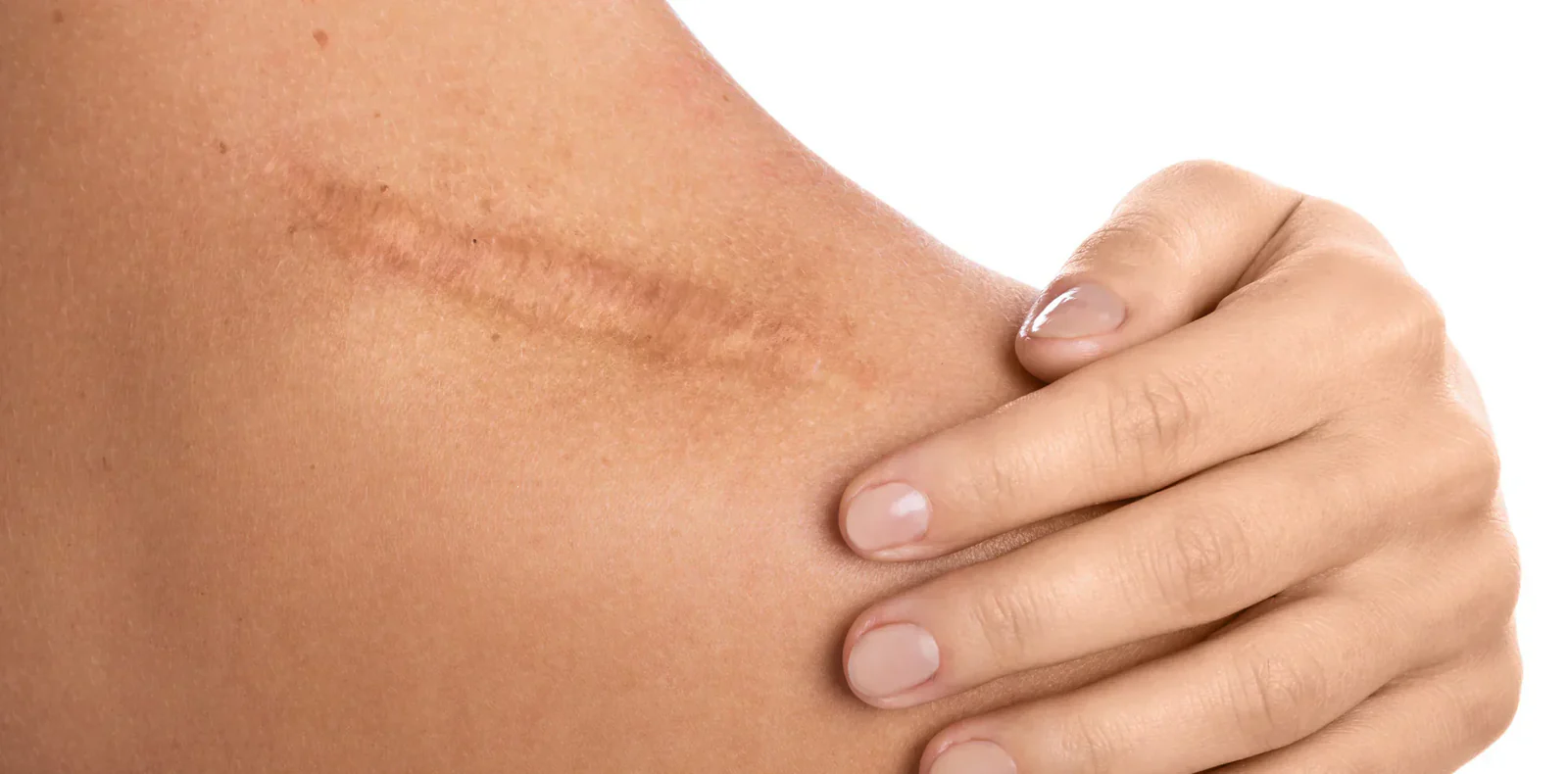
The months after. The tissues settle and the result stabilises. The scar keeps maturing: in the upper eyelid crease, or with the transconjunctival approach, it becomes almost imperceptible within twelve months, with some variation from person to person.
Your own week by week timeline is written by your surgeon: you will receive a personalised plan setting out the healing stages of your procedure in detail. Follow-up visits are scheduled at the intervals your procedure requires, with a direct line to your surgeon and their team if anything worries you in the meantime.
When you see the final result
The real “after” arrives once the swelling has fully resolved and the scar has finished maturing, a process that takes up to a year. That is why it is best not to judge the result in the mirror during the first few days.
In the first months it is important to protect the scars from the sun: you will find practical tips in our article on scars and sun. It is also one of the reasons many people choose to have surgery in the cooler months, as we explain in plastic surgery in autumn.
How much does blepharoplasty cost in Brescia
At Palazzo Manzoni blepharoplasty costs starting from €3,600 for the upper eyelids, starting from €3,600 for the lower eyelids and starting from €6,000 for combined upper and lower surgery. These prices are all inclusive: surgeon, anaesthesia, operating theatre, any overnight stay and follow-up visits. You will find all starting prices on our plastic surgery costs page.
The exact figure comes after the consultation, in a written quote: it depends on the extent of the procedure, the time in theatre and whether other procedures are combined. The consultation lasts about an hour, costs €100 and is deducted from the price of surgery if you decide to go ahead. It may also end with the advice not to have surgery, or to choose a smaller treatment.
Frequently asked questions
How long is recovery after blepharoplasty?
In most cases social downtime lasts a few days, but the course varies: upper, lower and combined blepharoplasty have different timelines, and swelling and bruising fade at a personal pace. Your surgeon gives you a plan with the healing stages of your procedure.
When can you see the result of blepharoplasty?
The change starts to show as swelling and bruising fade. The final result is assessed once the tissues have settled and the scar has matured, a process that takes up to a year.
Does blepharoplasty leave visible scars?
On the upper eyelid the incision is hidden in the natural crease; on the lower eyelid the approach can be transconjunctival, from the inside, or through the skin. In these areas scars become almost imperceptible within twelve months, with some variation from person to person.
Can upper and lower eyelids be treated together?
Yes: combined blepharoplasty corrects the upper and lower eyelids in a single operation, when both contribute to a tired look. At Palazzo Manzoni it costs starting from €6,000, all inclusive.
How much does blepharoplasty cost in Brescia?
At Palazzo Manzoni it costs starting from €3,600 for the upper or lower eyelids and starting from €6,000 for both, all inclusive. The exact figure comes in a written quote after the consultation.
If you recognise yourself in the “before” photos and want to understand what is realistic for your eyes, the first step is an assessment with the surgeon. At the Plastic Surgery department of the Istituto Chirurgico Palazzo Manzoni in Brescia, you can read more on our blepharoplasty page and book a consultation online or by phone on +39 030 294 2437.