Scars and Sun: How to Protect Your Results in Summer
10.08.2026
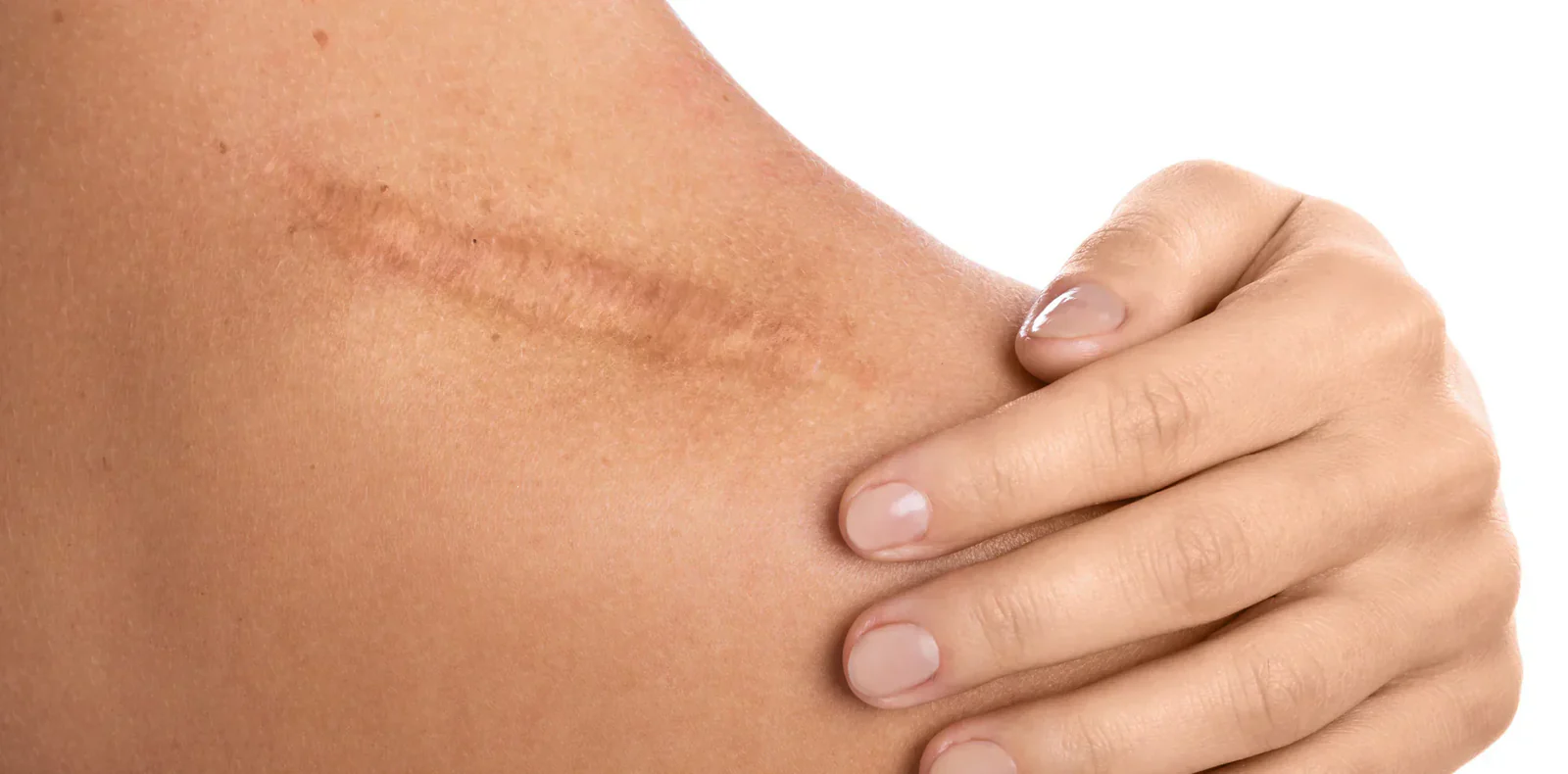
You had plastic surgery in the past few months and now, at the height of summer, you are wondering whether you can enjoy the sun and the sea without compromising your result. It is one of the most common questions at this time of year, and a fair one: a recent scar is still immature tissue, and it reacts to ultraviolet light very differently from healthy skin.
In this guide, the plastic surgery department of Istituto Chirurgico Palazzo Manzoni in Brescia explains why scars and sunlight do not mix, how long a scar needs to be protected, and what precautions to take at the beach, in the pool and around town, so you reach September with a scar that is healing well.
Why the sun is a risk for recent scars
A scar is not “finished” when the stitches come out. Once the wound has closed, a long remodelling phase begins that can continue for many months: during this period the scar looks pink or reddish, is more sensitive, and its final appearance has not yet been determined.
Ultraviolet rays stimulate melanin production, but scar tissue responds unevenly: early sun exposure can cause hyperpigmentation, a darker mark that follows the line of the scar and that, once it appears, can be difficult to fade. The sun can also intensify redness and worsen the final quality of the scar. Protecting it is not excessive caution: it is an integral part of post-operative care.
Did you know?
That the sun worsens scars is more than just an impression. In a randomised study, small skin biopsy wounds were either exposed or not exposed to solar UV rays after the procedure: at 12 weeks, the irradiated scars that had healed without stitches were more pigmented and were judged the most disfiguring.
How long to wait before direct sun exposure
There is no single number that applies to everyone: timing depends on the type of procedure, the location of the scar, your skin phototype and your individual tendency to scarring. As a general, prudent rule, direct exposure should be avoided until the wound is fully closed and stable, and the scar should in any case be shielded from the sun for as long as it still looks pink, often for the entire first year.
Your most reliable reference remains your surgeon’s advice: they know the procedure that was performed and how your healing is progressing, and sun management is tailored case by case at your follow-up visits.
Practical rules for protecting a scar in summer
- Physical cover comes first. In the early stages the most effective protection is mechanical: dedicated dressings or tapes, clothing that covers the area, and a wide-brimmed hat for scars on the face.
- Very high sun protection factor. Once the scar has fully closed, apply a very high protection sunscreen (SPF 50+), and reapply it generously after swimming or sweating.
- Smart timing. Avoiding the middle hours of the day, when radiation is strongest, greatly reduces overall exposure.
- No “camouflage tanning”. Exposing a scar in the hope that it will blend in with tanned skin often achieves the opposite: scar tissue pigments unevenly and the scar becomes more visible.
- Daily care. Keeping the skin hydrated and continuing any products recommended by your surgeon, such as silicone-based gels, helps the scar mature under the best possible conditions.
Sea, pool and heat: what to watch in the first months
For swimming in the sea or the pool, one simple rule applies: the wound must be completely closed and your surgeon must have given the go-ahead. Getting in the water too early exposes the wound to irritation and maceration. Salt and chlorine can also irritate a young scar: after swimming, rinse the area with fresh water and pat it dry gently, without rubbing.
Watch out for friction as well: swimwear, belts and backpacks that press on a recent scar, for example after breast surgery or a tummy tuck, can inflame it. Choose soft fabrics and cuts that do not rub against the treated area. Finally, the heat: in the first months it is normal for mild swelling in the treated area to become more noticeable in hot weather; as a rule this is temporary, but mention it to your surgeon if it is marked or persistent.
Did you know?
Even once mature, a scar never becomes as strong as the original skin: it recovers only 70% of its tensile strength. Curiously, in the early stages of gestation the fetus repairs skin wounds without leaving scars; in humans, scarring begins at around the 24th week.
Source: Larson BJ et al., Plastic and Reconstructive Surgery 2010
What if the scar has already changed? When to get checked
If your scar has darkened, thickened, become redder or started to itch persistently, the right step is a specialist assessment: many changes are easier to manage when caught early. Dedicated treatments exist to improve the appearance of a scar, but their suitability must be evaluated case by case, for each individual scar and each individual patient, without standard promises.
Frequently asked questions
Can I go to the beach after cosmetic surgery?
Yes, once the wound is fully closed and your surgeon has agreed. The scar must still be protected with physical cover or a very high SPF sunscreen, avoiding the middle of the day and reapplying the product after every swim.
Is sunscreen enough to protect a recent scar?
Sunscreen is essential, but in the early stages the most reliable protection is physical: dedicated dressings, clothing and shade. Combining the two approaches offers the greatest safety.
How long does a scar remain delicate?
Scar maturation generally takes many months and in some cases more than a year. As long as the scar looks pink or reddish it should be considered a work in progress, and therefore protected from the sun.
Protecting your scar is part of caring for your result, just as choosing the procedure was. In the plastic surgery department of Istituto Chirurgico Palazzo Manzoni, patients undergoing procedures such as breast surgery, body contouring or facial surgery receive personalised guidance on scar care in every season of the year.
If you have a recent scar and want to enjoy the summer with peace of mind, or if you notice its appearance changing, book a consultation with our specialists or call 030 294 2437: together we will define the protection strategy best suited to your case.