
Breast Surgery · Preservé Technique
Minimally invasive breast augmentation in Brescia: the space is created, not carved out.
Minimally invasive, tissue-preserving breast augmentation, known as the Motiva Preservé technique, changes the way the space for the implant is prepared. Instead of separating the tissues with extensive dissection, they are stretched gradually and in a controlled way with dedicated instruments, through a small incision in the inframammary fold.
At Palazzo Manzoni it is performed by Dr. Stefano Di Nonno, Specialist in General Surgery, with a master’s in Aesthetic Surgery and a certified Preservé surgeon, within the breast surgery team led by Dr. Enrico Motta. It is not the right technique for everyone: at the consultation we assess whether it is suitable for you or whether a traditional approach is better.

Inframammary fold
Access is through a small incision in the crease under the breast
Respect for tissues
The space for the implant is created by controlled expansion
No-touch
The implant goes in through a sleeve, without being touched
Tailored to you
Suitability decided at the consultation, case by case
Preserving the Tissues
A simple idea: change as little as possible.
In traditional breast augmentation, the surgeon creates the space for the implant, the so-called pocket, by separating the tissues with a scalpel or electrocautery. It is a technique proven over decades, and it remains the best choice in many situations.
The tissue-preserving approach starts from a different question: how much of the breast really needs to be altered to accommodate the implant? The aim is to integrate the new volume into the anatomy that is already there, respecting the supporting structures of the breast as much as possible.
Preservé is the system developed by Motiva, a breast implant manufacturer, for tissue-preserving breast augmentation: it involves specific instruments and Motiva smooth-surface implants. So it is not a different implant, but a different way of preparing the space for it.
Did you know?
The first silicone breast implant was placed in 1962 in Houston, Texas, by two plastic surgeons, Thomas Cronin and Frank Gerow, and presented the following year at an international congress. Since then, implants have changed from one generation to the next; today research is also looking at how to prepare the tissues that receive them.
Sources: Maxwell GP, Gabriel A, Gland Surgery 2017; Glicenstein J, Annales de Chirurgie Plastique Esthétique 2005
How It Works
The technique, step by step
The Preservé instruments are specific and may only be used after certification issued by Motiva, which Dr. Di Nonno has obtained. The steps are always the same, while the volume and profile of the implant are chosen to suit your anatomy.
As with any breast augmentation, the implant is recorded in the Italian national breast implant registry.

Did you know?
“No-touch” insertion has been measured: in a study of 100 women, using a dedicated funnel reduced the incision on average from 46 to 35 millimetres, and the time needed to pass the implant through the incision from 16 to 6 seconds. The total insertion time, however, did not change significantly.
01
Access
A small incision in the inframammary fold, the crease under the breast, where the scar tends to stay hidden.
02
The channel
A separator opens a passage towards the area that will hold the implant, following the natural planes of the tissues.
03
Controlled expansion
An inflatable balloon stretches the tissues gradually until the necessary space is created, instead of obtaining it through extensive dissection.
04
No-touch insertion
The implant goes in through a dedicated sleeve, without touching the skin or the surgeon’s hands: this is the “no-touch” principle.
05
Closure
The incision is stitched; a support bra and scheduled check-ups follow.
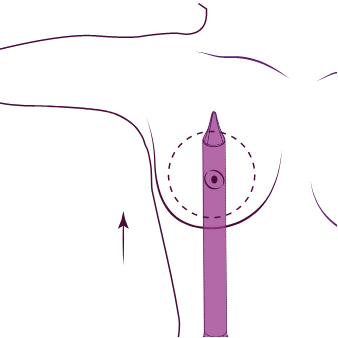
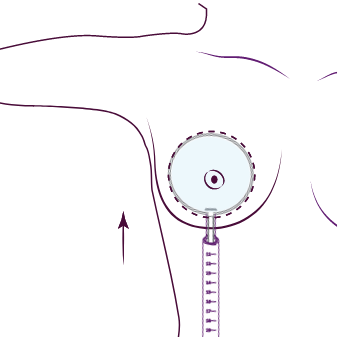
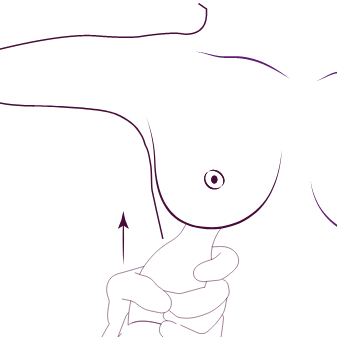
Illustrations courtesy of Motiva.
What the Studies Say
A promising technique, with evidence still at an early stage
The Preservé technique is recent, and publications are few, with short follow-up. Here is what we know today, without promises.
→Complications
In a series of 330 women followed up for an average of 18 months, the complication rate was 0.9%, with no severe capsular contracture. The same authors point out that the technique was not developed to reduce complications and that, compared with their previous results, which were already low, it did not reduce them to a statistically significant extent. Randquist 2026
→Recovery
In the first US series (159 women, followed up for an average of just under 5 months), half of those who answered the questionnaire at 3 months had returned to daily activities within one day, and a further 31% within 3-5 days. These are patient-reported data, with no comparison with the traditional technique. Pittman 2026
→Anaesthesia
In the same series, 64% of procedures were performed under local anaesthesia, with or without sedation, and 36% under general anaesthesia, chosen mainly when the augmentation was combined with other procedures. The most suitable approach is decided case by case. Pittman 2026
→Who conducted the studies
The published series come from the surgeons who developed and popularised the technique, partly in a supplement sponsored by the manufacturer. The editorial introducing them states that independent, randomised confirmation is needed. Graf and LeBlanc 2026
→Smooth implants and lymphoma
BIA-ALCL is a rare lymphoma linked to implants. In an independent study of 94 cases, all were associated with implants with a surface roughness above 10 microns, that is, textured implants; no association emerged with surfaces below this threshold. Santanelli di Pompeo 2026
The minimally invasive technique does not eliminate the risks of any breast augmentation: capsular contracture, rupture or malposition of the implant, rippling, infection and the possibility of further surgery over the years. We discuss them openly at the consultation.
Find out more: breast augmentation, breast lift (mastopexy) and plastic surgery costs.

The Lead Surgeon
Dr. Stefano Di Nonno
Specialist in General Surgery, with a master’s in Aesthetic Surgery. At Palazzo Manzoni he performs minimally invasive breast augmentation within the breast surgery team led by Dr. Enrico Motta, Specialist in Plastic, Reconstructive and Aesthetic Surgery.
Specialisation
General Surgery, with a master’s in Aesthetic Surgery
Certification
Motiva certification in the Preservé technique
Team
in the plastic surgery department led by Dr. Enrico Motta
Continuity
the same surgeon from the first consultation to the follow-up visits
Your Journey
What to expect in Brescia
Step 01
The consultation
Measurements, quality and thickness of the tissues, breast shape and expectations: we decide whether the minimally invasive technique is suitable and choose the implant, because with this technique trial sizers are not used in the operating theatre.
Step 02
The information
You receive the implant information sheet required by law and sign the informed consent form only after you have read it, with time to decide.
Step 03
The procedure
In the operating theatre, with the anaesthesia agreed at the consultation and tailored to your case.
Step 04
The first few days
A support bra, light activities and precise guidance on sport and work, tailored to you.
Step 05
Follow-up
Scheduled visits over the following months; the implant data are entered in the national registry within three days of the procedure.
Frequently Asked Questions
Frequently asked questions
about minimally invasive breast augmentation
What is minimally invasive breast augmentation?
It is a way of inserting the implant that creates the space by stretching the tissues with dedicated instruments, through a small incision in the inframammary fold, instead of separating them with extensive dissection. The implant then goes in through a sleeve, without being touched.
What is Motiva Preservé and which implants are used?
Preservé is the name Motiva uses for this technique: it includes a separator to open the channel, a balloon for controlled expansion and a sleeve for no-touch insertion. It is used with Motiva SmoothSilk smooth-surface implants, Ergonomix2 model. Volume and profile are chosen at the consultation, to suit your anatomy.
How does it differ from traditional breast augmentation?
What changes is how the space for the implant is prepared: by controlled expansion rather than by dissection. Published studies are still few and short, and so far they do not show that it is superior to the traditional technique: that is why the choice is made case by case.
Is it suitable for everyone?
No. The quality and thickness of the tissues, the shape of the breast, the degree of skin laxity and the desired volume need to be assessed at the consultation. When the breast sags considerably, for example, a breast lift may be needed; in other cases the traditional technique or the dual plane approach is more suitable.
Is recovery quicker?
Many women in the first published series reported returning to daily activities within a few days, but these data were collected through a questionnaire and without a direct comparison with the traditional technique. Recovery times depend on you and on the type of procedure.
What anaesthesia is used?
In the studies, most procedures were performed under local anaesthesia with sedation, and some under general anaesthesia. At Palazzo Manzoni the approach is chosen at the consultation, with sedation tailored to the individual case when indicated.
Where will the scar be?
In the inframammary fold, the natural crease under the breast, where it tends to stay hidden. Its length depends mainly on the volume of the implant and is assessed at the consultation.
At what age can it be done?
In Italy, cosmetic breast augmentation is only allowed from the age of 18, except for certified severe congenital malformations.
How much does it cost?
The price depends on the implant, the technique and any combined procedure. You will find starting prices on the plastic surgery costs page; after the consultation you will receive a written quote.
Take the Next Step
Your next step starts
with a conversation
At Palazzo Manzoni in Brescia, every consultation is personal, unhurried, and designed to give you clarity about your next step.
Address
Via dei Mille 14, 25122 Brescia, Italia
Phone
Hours
Mon-Fri 8:30-18:30 · Sat 9:00-13:00
01
Get in touch
Call, email, WhatsApp, or book online.
02
Meet your specialist
A personal consultation to understand your situation.
03
Your plan, your pace
Together you decide the best path forward.

Content reviewed by Dr. Stefano Di Nonno, specialist in General Surgery with a master’s degree in Aesthetic Surgery.