
Regenerative Medicine · Orthopaedics
PRP injections for the knee in Brescia: what to really expect.
Knee osteoarthritis (gonarthrosis) is one of the most studied applications of PRP. In selected patients, injections may help to reduce pain and improve joint function; however, it has not been proven that they make lost cartilage grow back.
At Palazzo Manzoni, PRP injections for the knee are performed by Dr. Claudio Gilardoni, a specialist in Orthopaedics and Traumatology, after an orthopaedic consultation and a review of your tests. Not all patients with knee osteoarthritis are ideal candidates: finding out whether you are is the first aim of the consultation.
Grade 1-3
Early and intermediate forms are the most suitable
Course of 3
The reference point in the Italian indications for osteoarthritis
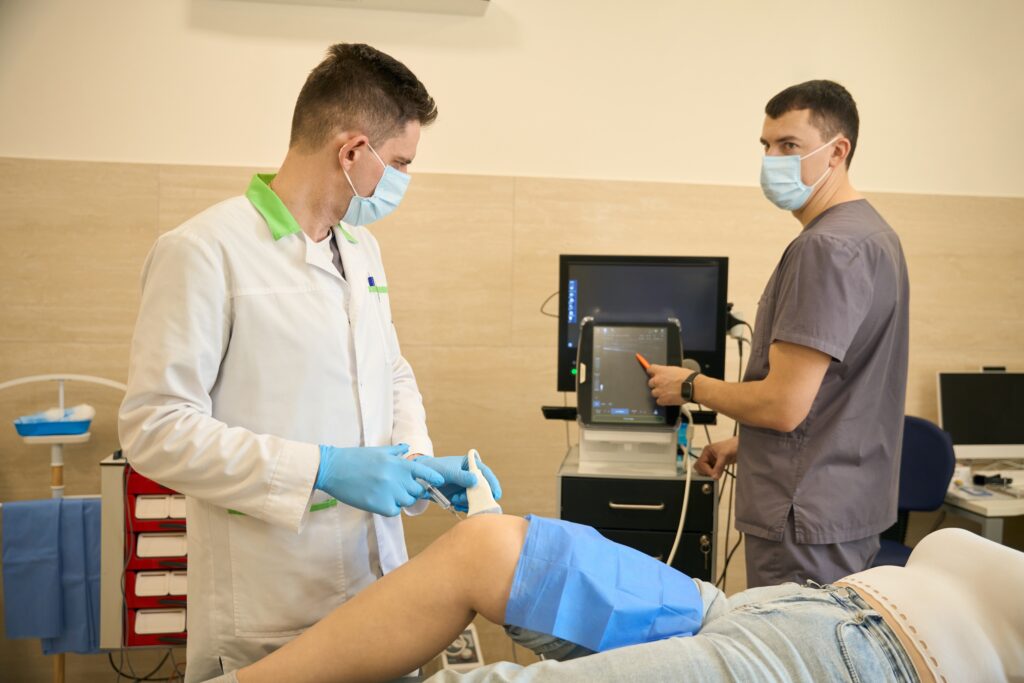
Ultrasound-guided
When useful, the injection is guided by ultrasound
Gradual effect
It is not a fast-acting painkiller
Knee Osteoarthritis
It is not just worn cartilage: it is the whole joint.
Osteoarthritis is a disease that affects the entire joint, not just the cartilage. The degenerative process also involves the synovial membrane, the bone beneath the cartilage, the capsule and the other joint structures, with inflammation that contributes to pain.
PRP is injected into the joint with the aim of modifying some of these biological and inflammatory processes. That is why the possible benefit mainly concerns pain and function, rather than rebuilding cartilage that is already severely damaged.
The realistic goal is therefore to feel better and move better for as long as possible, within a programme that includes exercise, weight management and, when needed, physiotherapy.
Did you know?
Knee osteoarthritis is far from rare: in 2020 it was estimated to affect around 654 million people aged 40 and over worldwide, 22.9% of this age group. It is about 1.7 times more common in women than in men.
The Ideal Candidate
Who may benefit from PRP for the knee
Before suggesting the treatment, we assess several factors. Two people with the same X-ray may have different indications.
In advanced forms, with significant structural damage or deformity of the joint, surgical treatment may remain the most appropriate solution.

01
Grade of osteoarthritis
The Italian indications and the European consensus mainly concern Kellgren-Lawrence grade 1-3 osteoarthritis, that is, from early to moderate.
02
Age and activity
Your age, your level of physical activity and what you want to get back to doing all matter: walking without pain, climbing stairs, playing sport.
03
Body weight
The load on the joint influences the symptoms and the results of any therapy.
04
Biomechanics
Misalignment of the leg axis or other biomechanical abnormalities may point towards other solutions.
05
Tests
Weight-bearing X-ray and, when needed, ultrasound or MRI to complete the diagnosis.
What the Research Says
PRP for the knee: the evidence, unfiltered
PRP in knee osteoarthritis has been the subject of dozens of randomised studies. The results do not all agree, and scientific societies interpret them differently. Here is the picture, in brief.
→Versus hyaluronic acid
In a meta-analysis of 18 randomised studies with more than 1,600 patients, the average improvement in pain, stiffness and function was 44.7% with PRP and 12.6% with hyaluronic acid. Belk 2021
→Versus placebo
In the RESTORE study (288 patients), at 12 months pain had decreased to a similar extent with PRP and with saline. A meta-analysis of 11 studies finds a benefit at 3 and 6 months, but not at 12. Bennell 2021; Auroux 2025
→Concentration matters
In a meta-analysis of 18 placebo-controlled studies, the subgroup analysis showed that more concentrated PRP (a threshold of around 1 million platelets per microlitre) gave clinically relevant pain relief, while less concentrated PRP did not. Bensa 2025
→The guidelines
The Italian indications from the Italian National Blood Centre (Centro Nazionale Sangue) give PRP a strong recommendation in grade 1-3 osteoarthritis; the European ESSKA-ORBIT consensus considers it a possible first choice among injections; the American AAOS describes the evidence as “limited”; the American College of Rheumatology recommends against it. Laver 2024; Pavone 2021
The honest message: in early and intermediate forms, PRP may reduce pain for a few months, with results that vary from person to person. It is an option to consider, not a guarantee.
The Most Frequently Asked Question
Does PRP make cartilage grow back?
Based on current knowledge, it would not be correct to say so. In the RESTORE study, at 12 months, cartilage volume measured by MRI had decreased to a similar extent with PRP (-1.4%) and with placebo (-1.2%), and a meta-analysis of 24 studies, 7 of which included structural assessments, found no difference in cartilage thickness compared with other treatments.
The possible clinical benefit is thought to be linked mainly to the treatment’s ability to modify certain biological and inflammatory processes in the joint. That is why we do not promise new cartilage: the realistic goal is to reduce pain and improve function.
There is no single protocol for the number of injections either. The Italian indications refer to a course of 3 applications; some studies suggest a possible advantage in terms of function with more injections, but the evidence is still weak, and there are not enough data to prefer PRP that is rich or poor in white blood cells.
Did you know?
By 2050, cases of knee osteoarthritis are expected to increase by around 75% compared with 2020. Between 1990 and 2020, osteoarthritis cases worldwide had already increased by 132%.
Source: GBD 2021 Osteoarthritis Collaborators, The Lancet Rheumatology 2023
Who Performs the Injections
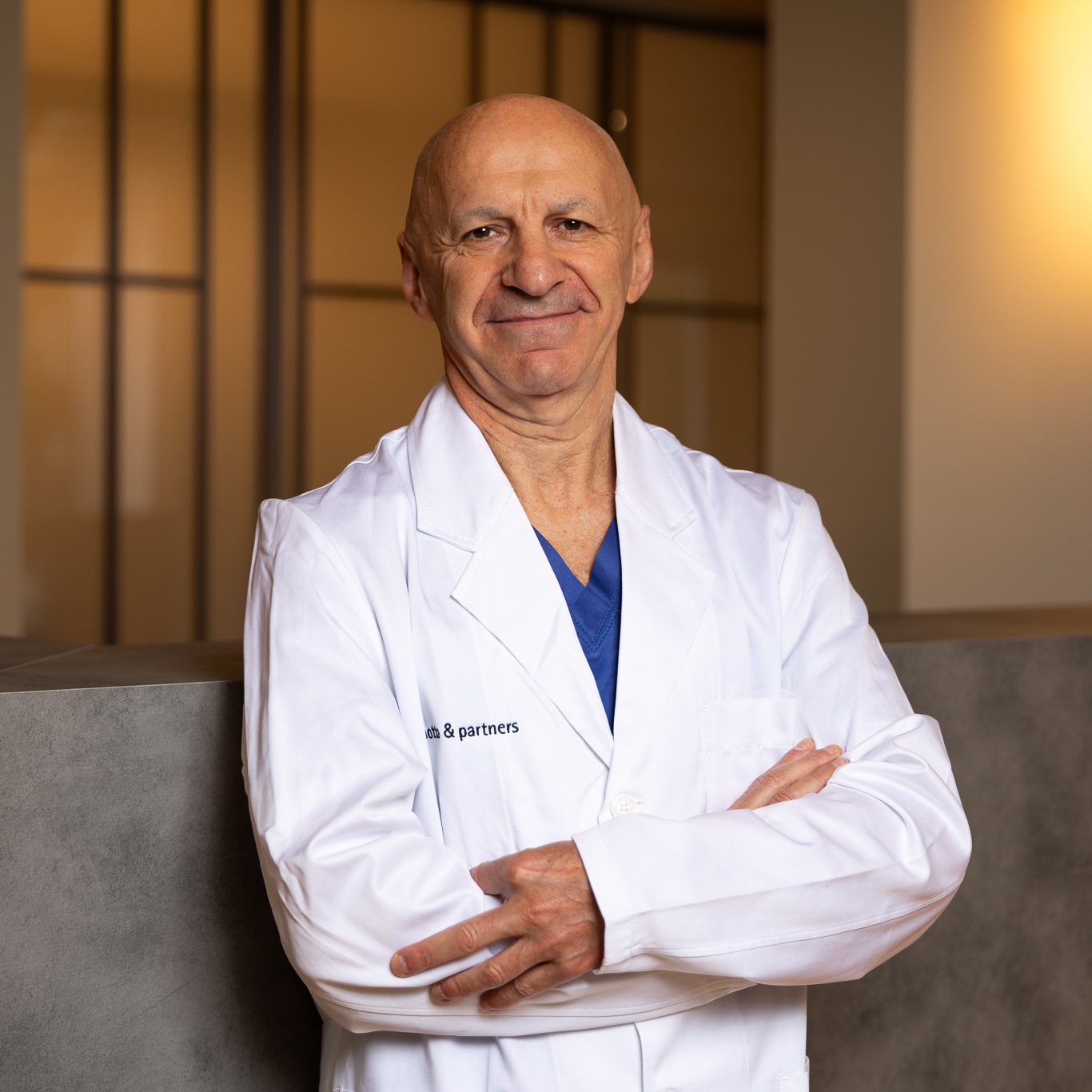
Dr. Claudio Gilardoni
Specialist in Orthopaedics and Traumatology, with experience in arthroscopic knee surgery and knee replacement. At Palazzo Manzoni he has been working in orthopaedic regenerative medicine since 2016.
Specialisation
Orthopaedics and Traumatology, University of Brescia
Knee
arthroscopic and joint replacement surgery; from 1997 to 1999 in the knee surgery and arthroscopy unit of the Spedali Civili di Brescia
Scientific societies
member of SIGASCOT, the Italian society dedicated to the knee, arthroscopy, sport and cartilage
The big picture
considers injections, rehabilitation and surgery, without shortcuts
Your Journey
How your knee treatment works
Step 01
The orthopaedic consultation
The history of your pain, an examination of the knee and a review of X-rays, ultrasound scans or MRI scans. Bring with you any tests you already have.
Step 02
The indication
If PRP is indicated, we discuss the alternatives, the number of injections and realistic results; if it is not, we tell you why.
Step 03
Blood sample and preparation
A blood sample, centrifugation and preparation of the PRP in the same appointment.
Step 04
The injection
Into the knee, as an outpatient procedure, under ultrasound guidance when useful to check the site precisely.
Step 05
Exercise and follow-up
An exercise programme and scheduled follow-up visits to measure pain and function in the following weeks.
Frequently Asked Questions
Frequently asked questions
about PRP for the knee
Does PRP for the knee work?
In selected patients with early or intermediate osteoarthritis, it may reduce pain and improve function for a few months, and in a meta-analysis of 18 studies it gave better results than hyaluronic acid. Compared with placebo, however, the results are conflicting: the large RESTORE study (288 patients) found no difference at 12 months. For this reason, we only offer it after a careful assessment, to those with an appropriate indication.
How many PRP injections are needed for the knee?
The indications from the Italian National Blood Centre (Centro Nazionale Sangue) refer to a course of 3 applications for knee and hip osteoarthritis. The exact number and the interval between injections are decided after the consultation and set out in the written plan.
How soon is the effect felt, and how long does it last?
The effect is not immediate: when it occurs, the improvement is gradual over the following weeks. In studies, the benefit on pain is most evident at 3-6 months; how long it lasts varies from person to person and is assessed at follow-up visits.
Is PRP or hyaluronic acid better for the knee?
There is no answer that applies to everyone. Several meta-analyses favour PRP, but the choice depends on the grade of osteoarthritis, your individual characteristics and your goals; in some situations, sequential strategies may be considered. At the consultation we explain the pros and cons of both options.
Does PRP make knee cartilage grow back?
No, there is no evidence that it does. MRI studies have shown no differences in cartilage compared with placebo or other treatments. The benefit mainly concerns pain and function.
Can PRP avoid the need for a knee replacement?
In early or intermediate forms it may help to control symptoms, but it is not a substitute for a knee replacement when surgery is indicated. A systematic review concludes that the data are insufficient to say that PRP injections delay knee replacement.
Are there any side effects?
In a meta-analysis of 24 studies, complications were more frequent with PRP than with placebo, but similar to those with hyaluronic acid and cortisone: mostly mild or moderate, such as pain and swelling, and they resolved on their own.
How much do PRP injections for the knee cost?
The cost depends on the number of injections and the type of preparation. After the orthopaedic consultation you will receive a detailed written quote for the whole course.
Take the Next Step
Your next step starts
with a conversation
At Palazzo Manzoni in Brescia, every consultation is personal, unhurried, and designed to give you clarity about your next step.
Address
Via dei Mille 14, 25122 Brescia, Italia
Phone
Hours
Mon-Fri 8:30-18:30 · Sat 9:00-13:00
01
Get in touch
Call, email, WhatsApp, or book online.
02
Meet your specialist
A personal consultation to understand your situation.
03
Your plan, your pace
Together you decide the best path forward.
Content reviewed by Dr. Claudio Gilardoni, specialist in Orthopaedics and Traumatology.